.png)


I Work Out Every Day and Here Is What Two Years Has Taught Me

I am not a certified personal trainer. Everything in this post is based on my own experience and what I have learned along the way. Please do your own research and consult a professional before starting a new workout program.
We Were Lied to About Fitness
Isn't it insane that growing up we were taught that doing 100 crunches and sitting on the elliptical for 45 to 60 minutes was the answer to getting the body we were looking for? That being a runner or doing a million crunches was the path to the physique we wanted? Nobody talked about being strong. The goal was just to be thin and the method was cardio until you wanted to quit.
Two years ago I decided that was not working for me and I changed everything.
First, Figure Out What You Want
Before you do anything else, you need to decide what you want your body to look like, because that answer determines everything about how you should be training.
Someone who wants to look like a runner should probably run a lot. Someone who wants visible muscle needs to lift. Someone who wants to be lean enough to see some definition without looking bulky needs a different approach entirely. Most women who say they want to be toned mean they want to be lean enough that the muscle they build actually shows. None of these goals are wrong. They are just different, and training for the wrong one is why so many women spend years working hard and going nowhere.
My goal is athletic. I am 5'8" and 150 pounds. I am not trying to be small. When I walk into a room I want people to think she definitely works out. I want curves where my body currently has none. That is my goal and I built my program around it.
My Current Workout Regimen

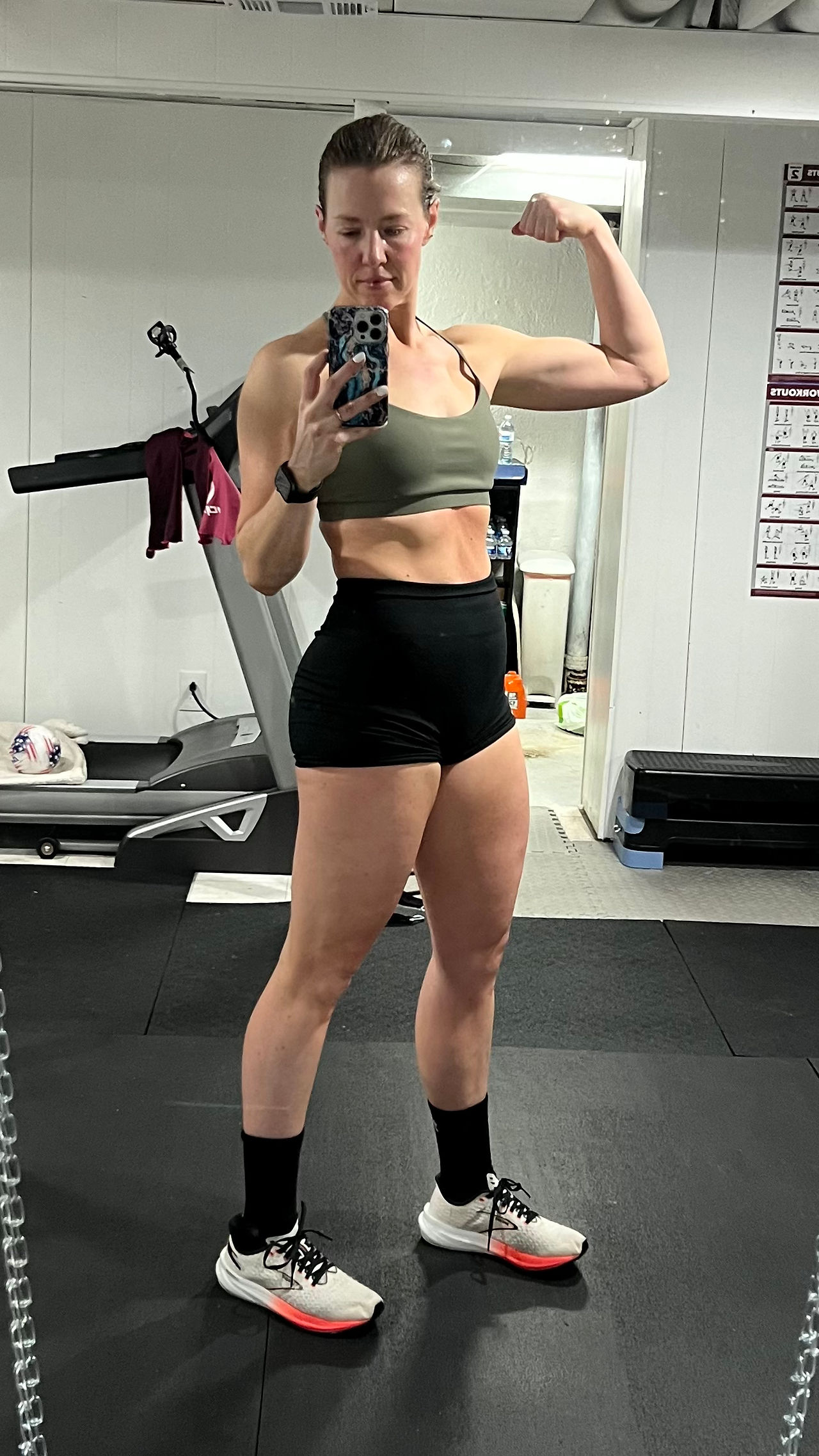
I work out every single day. I have not missed a day in over two years, including holidays. My alarm goes off at 5am and I get it done before life has a chance to interfere. Here is exactly what my week looks like:
Monday is my heavy day, quad and glute focused. Hip thrusts, Bulgarian split squats, narrow squats, regular squats, and kickbacks. I am currently hip thrusting 120 pounds for 10 to 12 reps and squatting 90 pounds for 10. This is the day I push hardest.
Tuesday is upper body. Bench press, rows, bird dog rows, lateral raises, Arnold press, and core work including dead bugs, V sit-ups, and weighted ab movements.
Wednesday is incline walking. Treadmill at a 13 incline, 3.8 miles per hour, for 45 to 55 minutes. It is harder than it sounds and it is one of the most effective things I do for my lower body without destroying my joints.
Thursday is a second leg day at a lower intensity. Hip thrusts, RDLs at 90 pounds for 8 reps, sumo squats, goblet squats, reverse lunges or step-ups, and kickbacks.
Friday is metabolic total body. Thrusters, plank to rows, snatches, high pulls, swings, and wood chops. Five circuits, lighter weight, higher intensity.
Saturday is a 2.5 mile walk at 3.8 to 4 miles per hour.
Sunday is 30 minutes of interval running on the treadmill.
On top of all of this I walk at least a mile every single day. Even on your hardest training weeks your body can handle a walk. It helps more than it hurts.

What Hypertrophy Means and Why It Matters
I spent a long time thinking lifting heavier automatically meant better results. It does not work that way.
Hypertrophy is the process of making your muscle fibers larger. It happens when you put your muscles under enough stress that they repair and grow back bigger. The key is not always the heaviest weight you can move. It is putting the muscle under tension, in the right rep range, with enough volume over time to force growth.
For glute growth that means moderate to heavy weight in the 8 to 15 rep range with good mind to muscle connection. You have to feel the muscle working. Controlled reps at a challenging weight do more than sloppy heavy reps with no tension on the muscle.
Progressive overload still matters but it does not mean adding weight every single week. It means adding reps, improving form, slowing down the tempo, or making small weight increases over time.
Hire a Coach If You Are Serious
I have a friend who started her fitness journey about a year ago and hired a coach from day one. In one year she has made more progress than I have in two years.
That is the difference between someone educated guiding you and someone figuring it out on their own, no matter how consistent that person is. If you have the budget and you are serious about changing your body, hire a coach who knows both programming and nutrition. It is the smarter path.
If you are not there yet, set small attainable goals, stay consistent, and keep learning as you go. Just know that the timeline will be longer.
Diet Is Doing More Work Than Your Workout
Your workout gets you in the room. Your diet determines what you look like when you leave it.
The composition of what you eat, how much protein you are getting, and how you are fueling your workouts matters more than most people want to hear. I am not a nutritionist but two years of paying attention has made it clear that my body changes faster when my nutrition is on point and barely changes when it is not, regardless of how hard I train.
Apps That Have Helped Me
I am not going to hand you a workout program and tell you it is the right one for your body. I do not know your history, your injuries, or where you are starting from. What I can do is share the tools that have kept me consistent and helped me learn along the way.
Ladder is a structured workout app that builds your program for you. If you want guidance without hiring a personal coach yet, this is a solid starting point.
Weight Watchers is the only nutrition approach that has worked long term for me. It does not eliminate any food group, it just tracks what you are consuming. For anyone who wants to go deeper, the app also shows your full macros which is helpful once you start paying attention to protein.
If you are brand new to working out, a beginner women's fitness app is a good place to start before jumping into something more advanced. I used one when I was getting started and it gave me enough structure to build a habit before I knew what I was doing.
One More Thing Nobody Tells You
This takes time. Real time.
We have been sold the 30 day fix and the 6 week transformation our entire lives and it is one of the most damaging things the fitness industry has ever done to women. Building muscle safely and changing your body composition can take months. For some goals it takes years. I am two years in and I am still building toward where I want to be.
If you go in expecting a quick fix you will quit when it does not come. If you go in understanding that consistency over a long period of time is the only thing that works, you will stay the course.
There is no shortcut. There is just showing up.

What You Need to Get Started
You do not need a gym membership. I train entirely at home. Here is what I would tell anyone to start with, all available on Amazon.
A dumbbell set starting at 5 pounds and going up to 30 pounds.
Resistance bands, non-negotiable for glute work especially when starting out.
Hybrid gym shoes. Not too thick, not too flat. Your feet need to be stable and connected to the ground.
A workout fan if you train at home.
A good sports bra, shorts you want to wear, a bench, a mirror for form checks, and a workout mat.
Consistency Is the Only Thing That Is Non-Negotiable
Not perfect workouts. Not the most optimized program. Not the best equipment.
Showing up every day. Even when it is just a walk. Even when you only have 30 minutes. Every rest day you take before you have earned it sets you back. Every day you show up is a deposit toward the result you want.
I started two years ago not knowing what I was doing. I still do not have it all figured out. But I show up at 5am and I figure out a little more each week.
This post contains affiliate links. If you purchase through my links I may earn a small commission at no extra cost to you.


